
The Crucible
Lewes Little Theatre’s production of The Crucible, performed from Saturday 14th to Saturday 21st March 2026, was a gripping and cohesive piece of ensemble theatre. Under Shaun Hughes’ assured and thoughtful direction, the production demonstrated a deep understanding of Arthur Miller’s text, allowing the play’s central themes of fear, conformity and moral courage to emerge through collective action as much as individual performance.
Hughes’ emphasis on ensemble storytelling was immediately apparent in the striking mute prologue. As Reverend Parris and the villagers silently kept watch over the stricken Betty Parris, played with affecting vulnerability by Susie James, the audience was immersed in Salem’s atmosphere of suspicion before a word was spoken. This carefully choreographed opening established the sense of constant observation and communal pressure that would drive the play’s escalating hysteria.
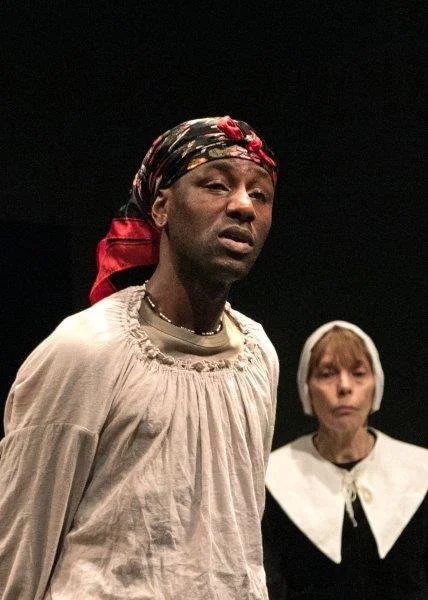
Throughout the production, the ensemble worked with impressive unity, particularly in scenes involving the girls and the wider community. Sasha Spall’s chillingly persuasive Abigail Williams was given real weight by the responsive performances around her. Ella Cambridge’s volatile Mercy Lewis, Clara Ross’ composed Susanna Wallcot and Emily Alexandra’s outstanding Mary Warren collectively created a believable, terrifying force, their shifting loyalties and shared panic vividly realised. Alexandra’s Mary Warren was especially compelling, her journey from nervous servant to emboldened court official, and finally to broken participant in the hysteria, one of the production’s most moving threads. Jacques Prince Kwaw’s Tituba was powerfully present in the first act with Tituba’s isolation and fear sharply defined by how the character is treated.
The adult community of Salem was equally well drawn. Darren Heather’s Reverend Parris was a study in anxious, insecure, self-preservation, while Jennifer Henley and Alan Lade brought simmering resentment and ambition to Ann and Thomas Putnam, reinforcing the sense that private grievances were being weaponised. Chloe Franks’ Rebecca Nurse provided a calm moral counterpoint, her dignity amplified by Tony Bannister’s quietly supportive Francis Nurse, who's evident dispair at his wife's incaceration and exasperatrion at "not being heard" makes their shared fate all the more tragic with the marked contrast in the convicted Rebecca in the final act. David Ford’s Giles Corey added warmth, humour and fierce integrity, his scenes brimming with humanity. Hearing the news of his fate in the final scenes was quite moving. Harry Hoblyn’s Reverend Hale offered a thoughtful and carefully modulated performance, convincingly charting his transition from confident authority to moral doubt. Jason Lever’s Ezekiel Cheever and Max Jones’ Marshall Herrick were sharply observed, lending credibility to the mechanisms of law and enforcement, while Liz Stapleton's Sarah Good demonstrated the fate of the vulnerable during this time.
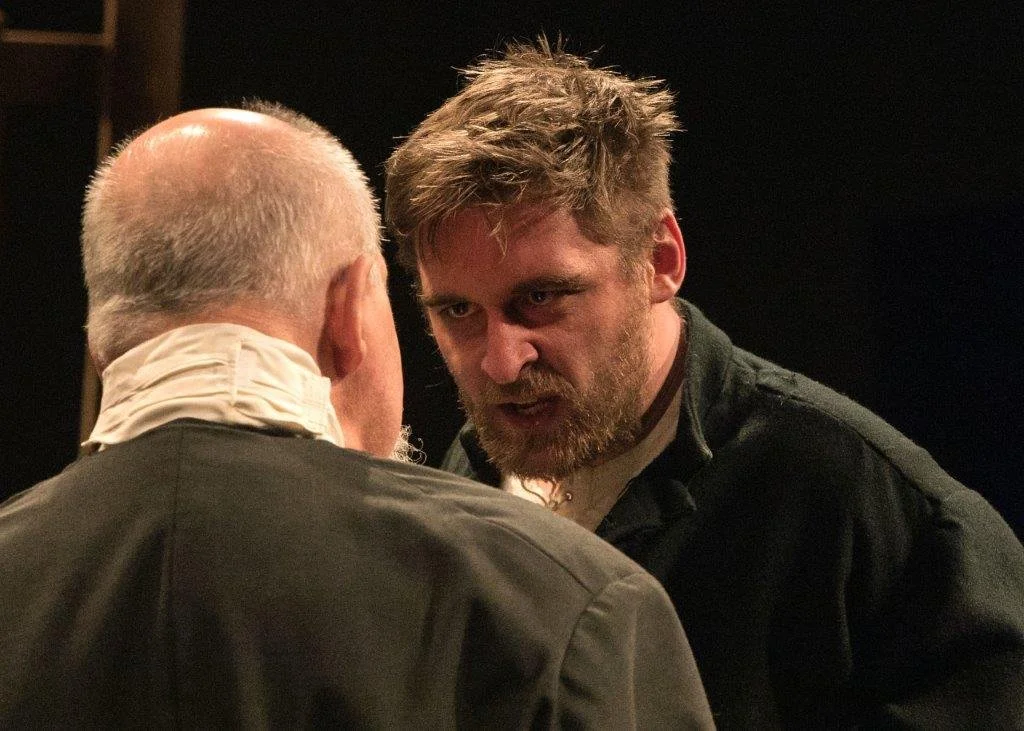
At the centre of this finely balanced ensemble was Tom Messmer’s outstanding John Proctor. While the production clearly thrived on collective strength, Messmer provided a vital emotional through-line. His performance was rich in nuance, capturing Proctor’s guilt, anger and reluctant heroism with clarity and restraint. Messmer's never domiintaed but felt deeply embedded within the community, his conflicts shaped by those around him. His scenes with Alison Finch’s measured and quietly powerful Elizabeth Proctor were particularly affecting, the pair conveying a marriage strained by silence, regret and unspoken love. Messmer laid bare Proctor's darker side with his confession of lechery with Abigail and the powerful "I have known her" line which exposed his failures as a man. As the play moved towards its conclusion, Messmer’s performance grew in intensity. His final refusal to compromise his name was delivered with rasping emotion and conviction.
The courtroom scenes exemplified the production’s ensemble strength. Alan Chapman’s Judge Hathorne and Robert Hamilton’s formidable Deputy Governor Danforth embodied institutional authority with chilling certainty. Hamilton’s Danforth radiated an unyielding resolve that rendered dissent not merely futile but dangerous, a quality underscored by the ensemble’s fearful reactions and compliance. The line “speak nothing of Andover” encapsulating the court’s determination to suppress reason in favour of control.
Christopher Pugh’s lighting and sound design supported this ensemble-driven approach superbly, sculpting group scenes with stark contrasts and enhancing moments of collective hysteria, while also allowing intimate exchanges to breathe. Costumes by the theatre's wardrobe team grounded the production firmly in its puritanical setting, their restrained palette reinforcing the sense of conformity and social rigidity that traps the characters.
Overall, this was a powerful example of ensemble-led storytelling. Shaun Hughes’ clear directorial vision, a uniformly committed cast combined to create a production that was cohesive, unsettling and deeply affecting. Lewes Little Theatre once again demonstrated its ability to tackle ambitious material with intelligence, confidence and a strong sense of collective purpose.
Chris Bennett - March 2026